Ace Combat 2 (1997, PlayStation)
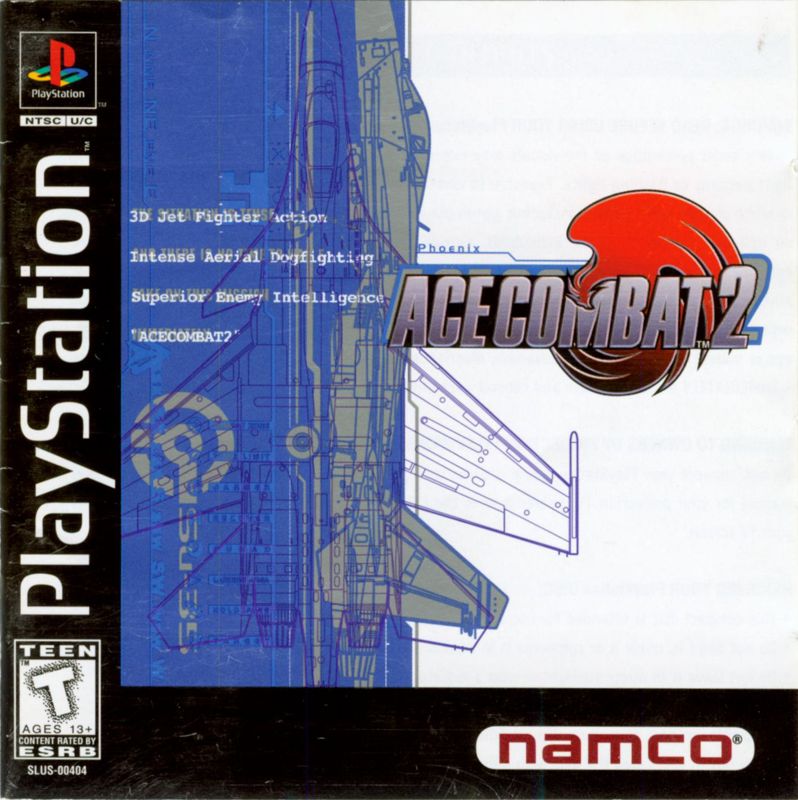
It’s been two years since Air Combat came out. The home console landscape: the PlayStation has become a successful mature platform; the Sega Saturn is on its way out of the market; and the Nintendo 64 has helped make polygonal 3D console games mainstream. Air Combat sold well, and Namco has decided to develop a sequel. Ace Combat 2 lands on store shelves in the summer of 1997.
When firing up Ace Combat 2, the visual upgrade from the first game is instantly noticeable. The planes and especially the environments have taken a dramatic step up. It quickly becomes apparent that the gameplay is significantly refined, too. The game feels shockingly modern, almost like a low-poly version of the Ace Combat releases from two decades in the future. Air Combat established the basic framework of the franchise, but Ace Combat 2 makes improvements in just about every conceivable area—a lot of what Ace Combat would become really starts here.
Graphically, the ground geometry and textures feel significantly higher-fidelity in a way that not only looks great but also benefits gameplay; it’s easier to get a handle on your altitude and orientation at a glance, even when flying over an expanse of water. We’re far beyond the flat landscapes of Air Combat that drew my somewhat-insulting comparisons with Pilotwings. There are also some neat cloud-layer effects; you can zoom up above the cloud deck and then dive back down through it to attack. The game still has obvious draw-distance limitations, with chunks of distant terrain popping into existence suddenly. But this generally is far enough away from you that it doesn’t affect the gameplay.
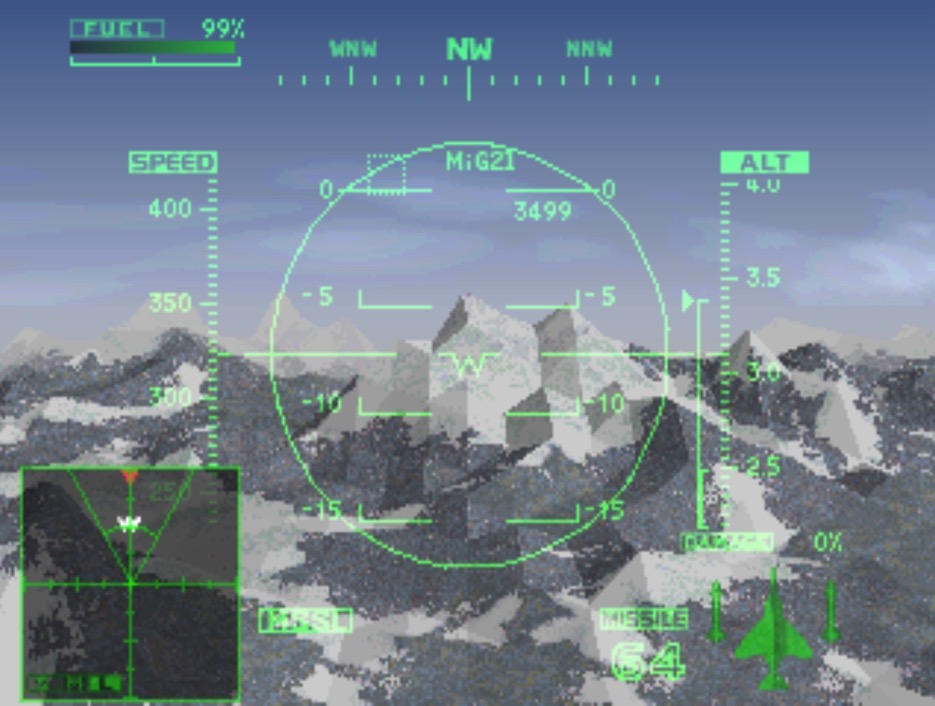
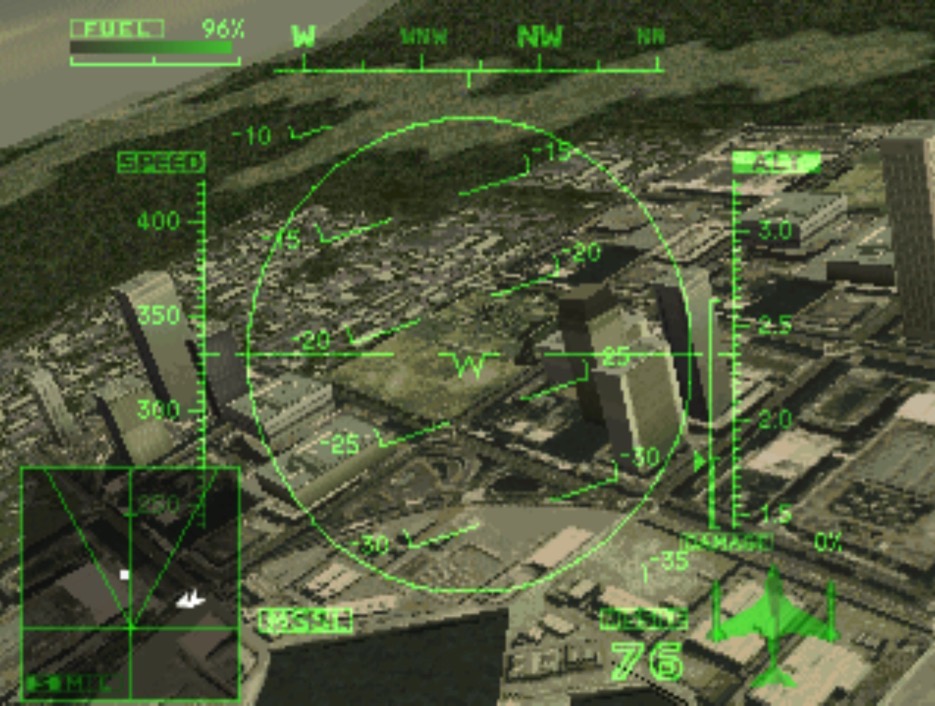
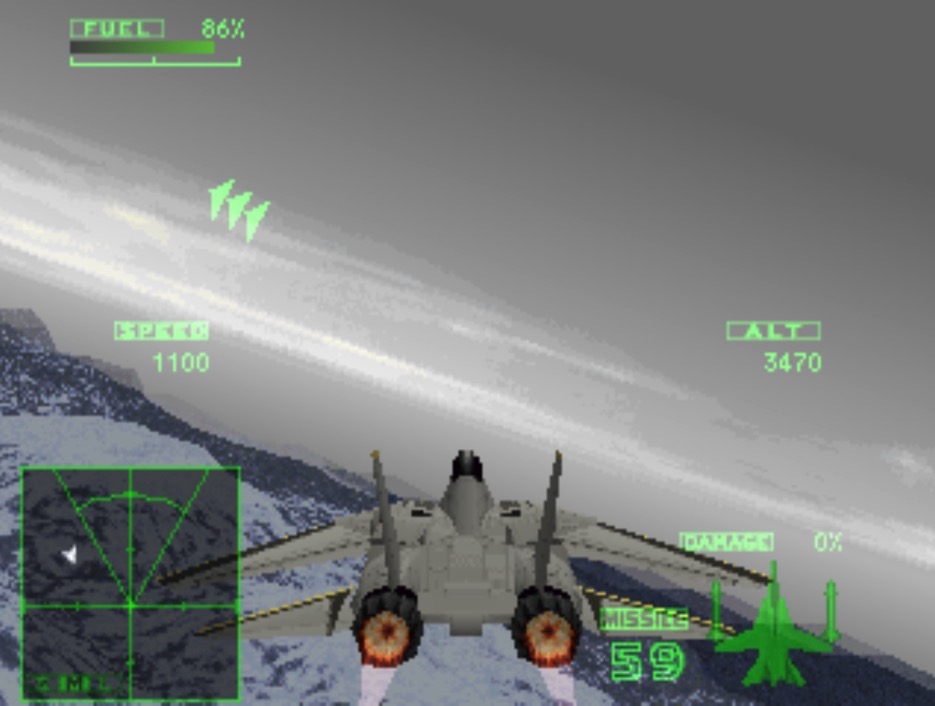
Other aspects of the presentation are strong, too. The menus and interface are very techy and computery in a late-90s sort of way, with some elements—green graphics cascading down a black screen—even looking a bit like The Matrix (which would come out two years later). This aesthetic makes Ace Combat 2 feels very much like a game of its time, but it still works. Occasionally the menus can layer upon themselves in a way that feels overly busy, but the interface always feels cool. The color of the in-game HUD is changed from white in Air Combat to green here, and the HUD’s graphical elements are refined into the basic style they’d carry onward through the series.
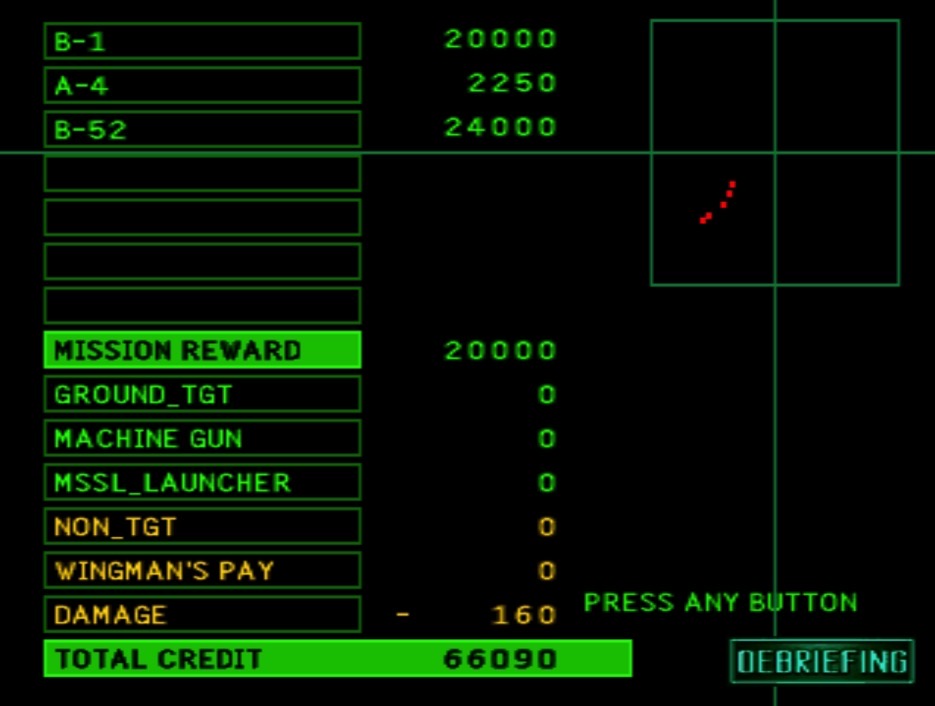
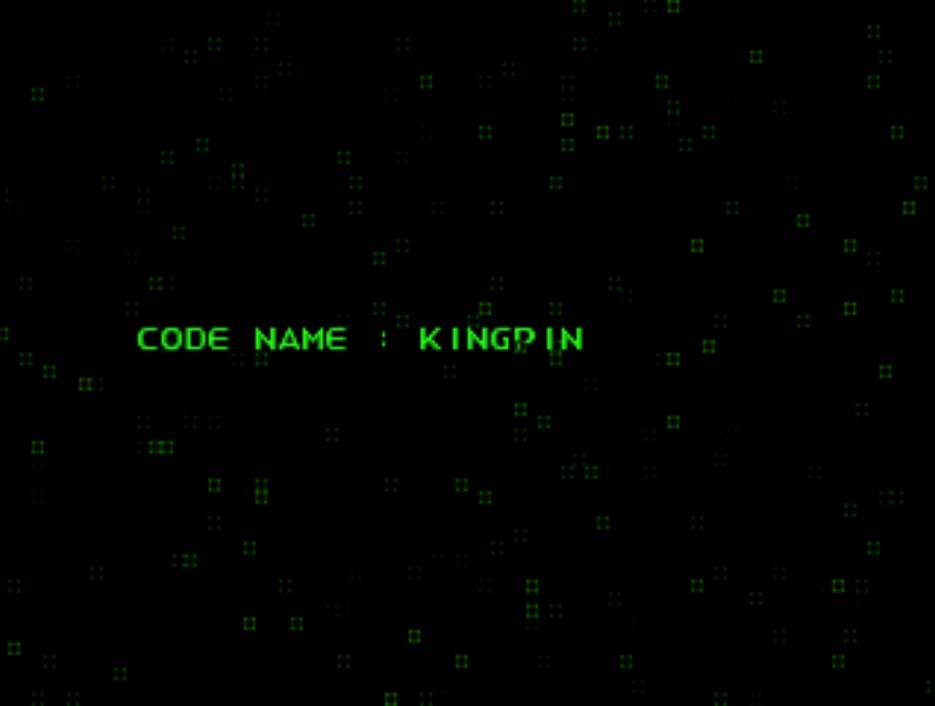
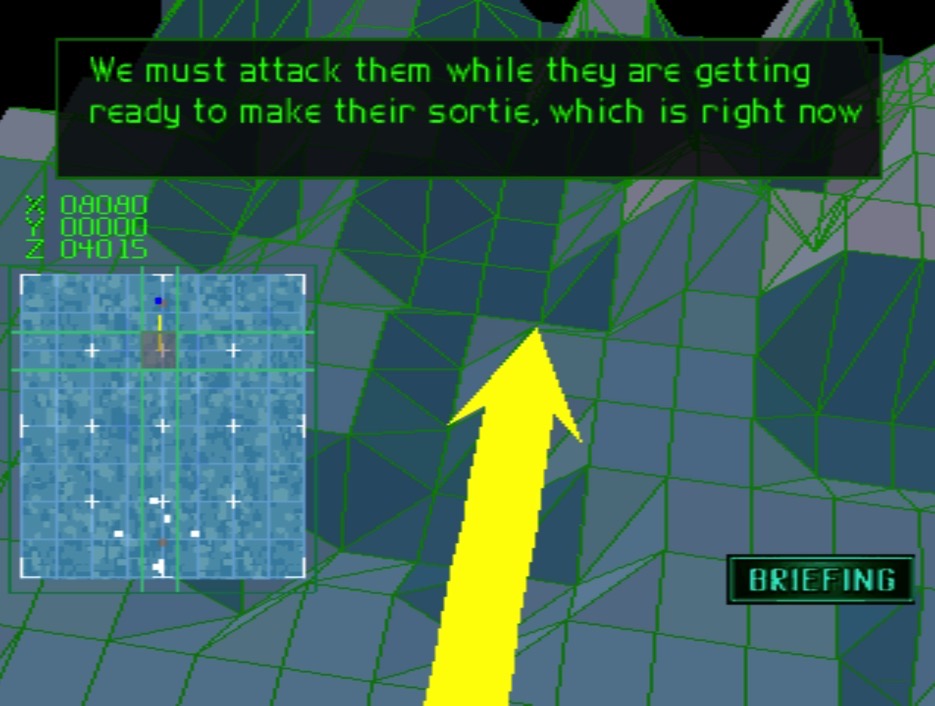
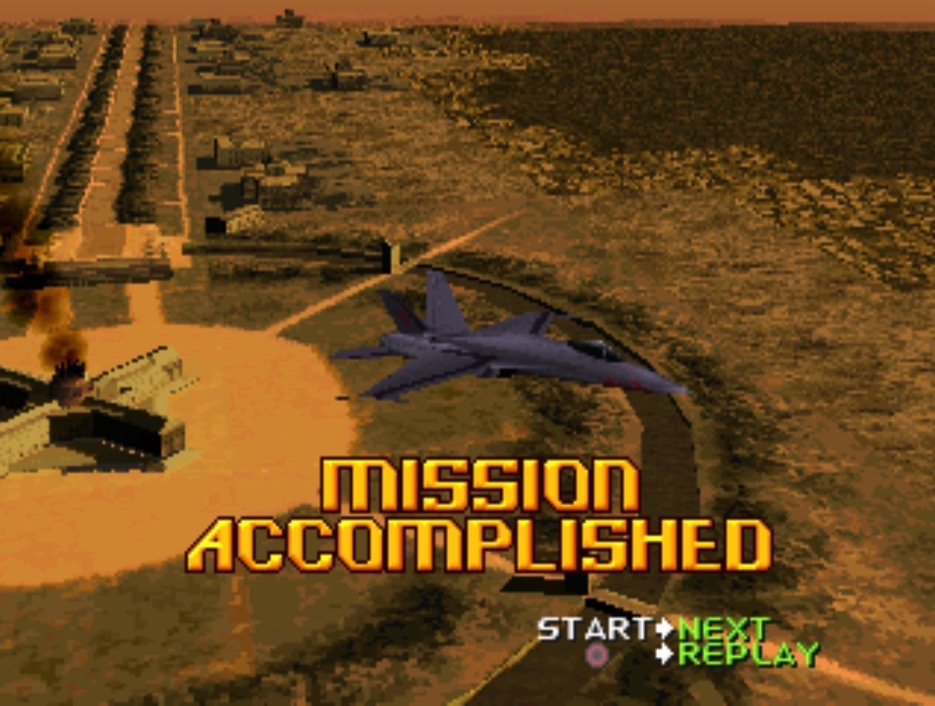
The pre- and post-mission elements get a significant upgrade over Air Combat. There’s a fancier world map on the mission select screen, and there’s a much slicker briefing using neat 3D maps that lean into the low-poly look. As with the first game, there’s a single character providing the voiceover explaining the context and objectives; the actor does a decent job but the writing is at times clunkier than it was in the first game. At the conclusion of a mission, there’s a new replay option that shows the last moments of the mission from a couple different angles. Because missions end at the instant you destroy the final target, the replay system ends up catching some cool action shots.
The gameplay is remarkably smooth and modern, with controls that feel more responsive and precise than in Air Combat. Mechanically there’s not really anything new you can do while flying the plane. There are still no special weapons in this game, and you still have a fuel gauge that acts basically as a mission timer; these two elements won’t be around in the series much longer. But the mission design is a lot more ambitious in Ace Combat 2. In one mission, you need to destroy something that lies within a closed facility. You have to wait for allied ground forces to enter the facility and open a huge door, and then you have a limited time to fly in there and blow up the thing. In another, you have to defend a downed friendly plane from enemy ground forces, and you fail if enemy tanks reach the crash site.
There are also significant branching mission choices, including a section of the game where you choose one of two routes and play a series of unique missions. In another addition, there are now named ace pilots that appear in missions, and you can shoot them down to earn medals. The developers were able to spin an impressive variety of gameplay variety out of a relatively simple mechanical formula.
And the music! I was surprised by how much I enjoyed the soundtrack in Air Combat, with its Top Gun–inspired rock and synth; rock is still the predominant flavor in Ace Combat 2, but there’s also a wider set of musical influences. We have some very late-90s drum-and-bass material in Dead End, some funk breakdowns in Warning Line, and synthy strings and horns in Night and Day. We’re still a long way from the fully orchestrated scores of future Ace Combat releases, but the tunes in Ace Combat 2 are catchy and fun.
Ace Combat 2 holds up incredibly well. But even though the developers sharply refined Air Combat, there are key things missing. Future games will include special weapons to add even more gameplay variety, radio chatter to help the game feel more alive, and more involved plotlines. (There’s more of a story here than in Air Combat, but I didn’t find the narrative especially engaging—as evidenced by the fact that I didn’t think to write about it until just now.) However, Ace Combat 2 remains extremely compelling and playable today, and it is even more impressive when stacked up against its predecessor. Playing through the game in 2026, I rate it at an 8 out of 10.