Air Combat (1995, PlayStation)
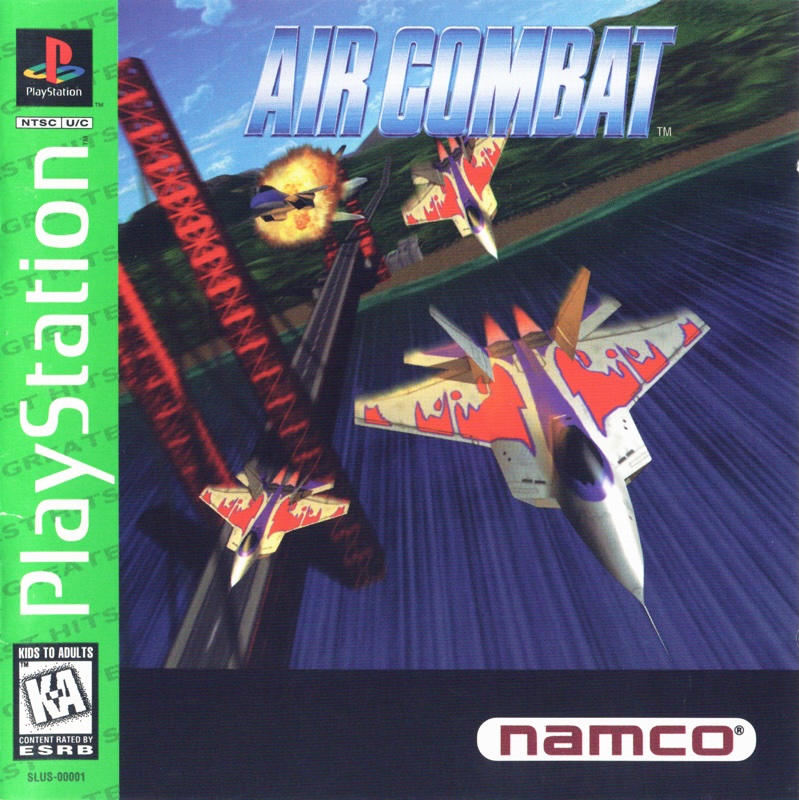
The funny thing about the first game in the Ace Combat series is that it’s not really the first game in the series and it’s not called Ace Combat. Air Combat came out in 1995 as a launch title for the original PlayStation. Made by Japanese developer Namco, the game had been released under the name Ace Combat in Japan but was retitled Air Combat for the US market. And while it’s the first Ace Combat game for home consoles, it’s actually a reworked and expanded version of a 1993 arcade game that was called Air Combat globally.
OK, with that backstory out of the way, what did players experience when they popped in their shiny new Air Combat discs and booted up their PlayStations on launch day in 1995? Having freshly played through the game 31 years later, I have some thoughts.
Air Combat is a solid-for-its-time arcade flight sim that strains against the technical limitations of early PlayStation development. Keep in mind that we’re in the nascent days of proper 3D graphics on consoles. Super Mario 64 is a year in the future. In terms of flight games, Pilotwings (open-ended flight, but no polygons) came out about four years ago and Star Fox (on-rails flight, with polygons) came out about two years ago. With Air Combat we have polygonal 3D graphics and fairly enormous levels to fly freely around. It feels pretty ambitious for a new piece of hardware in 1995.
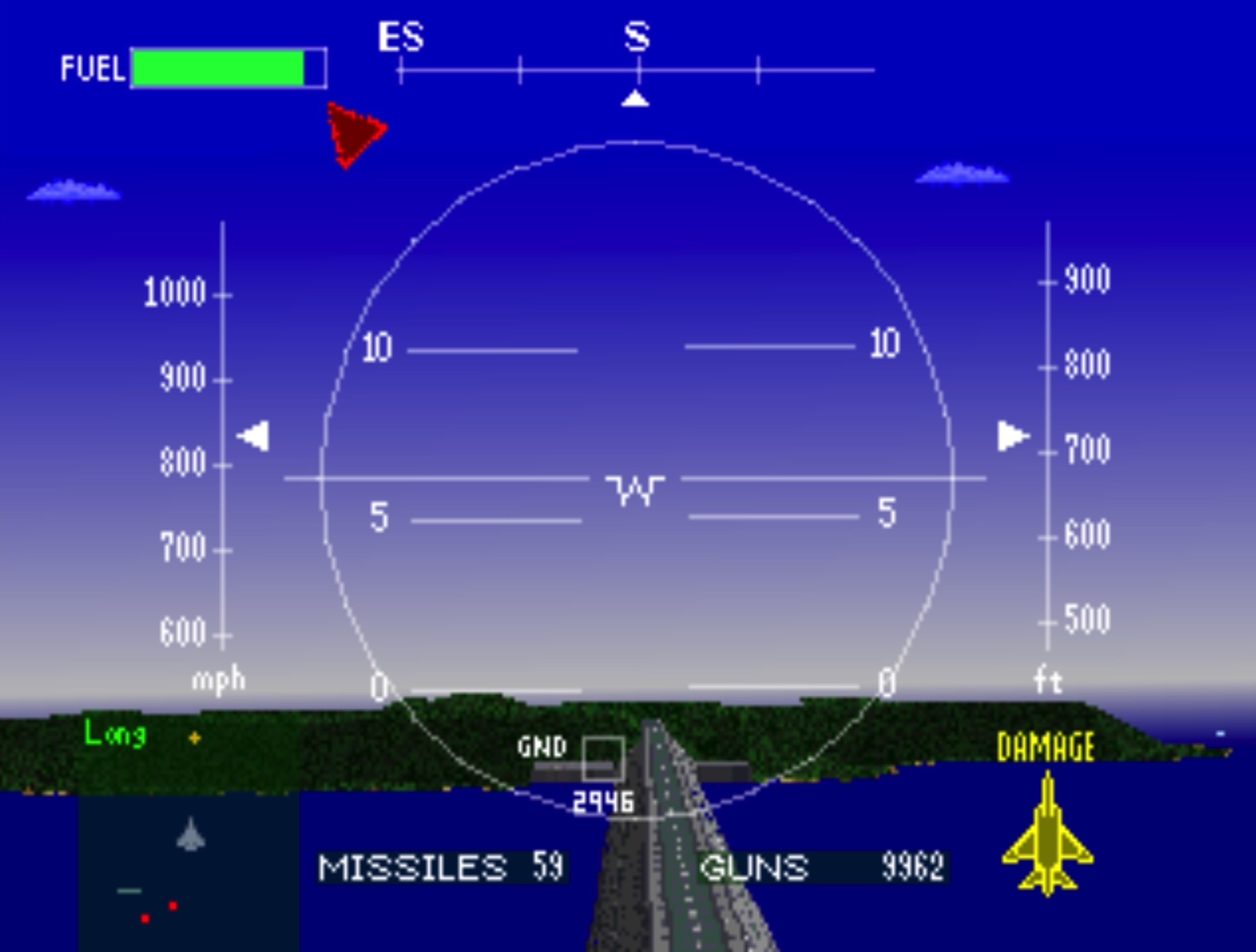
But as with many polygonal PlayStation games, the textures are swimmy and wobbly. The shallow draw distance means lots of pop-in. The mostly flat and plain-looking ground doesn’t look a whole lot more advanced than what we saw in Pilotwings on the SNES. The rough graphics create gameplay challenges, making it quite easy to smash into the ground inadvertently or (especially) judge depth and distance in the levels where you’re flying through canyons. Still, there are successful moments where the developers feel like they’re trying to impress with their 3D graphics. For example, missions end with a neat little 360-degree flyaround of your jet as the catchy victory tune plays.
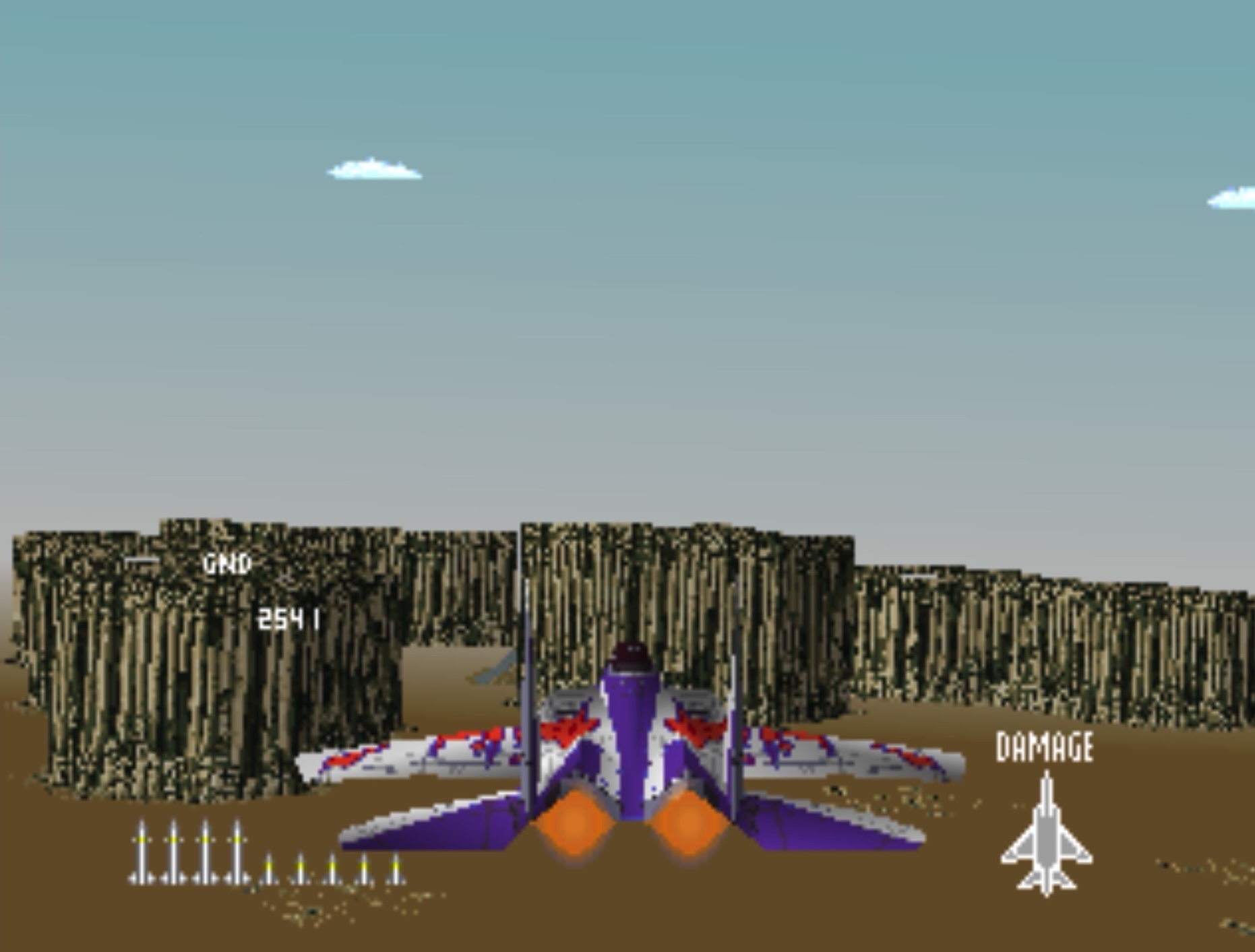
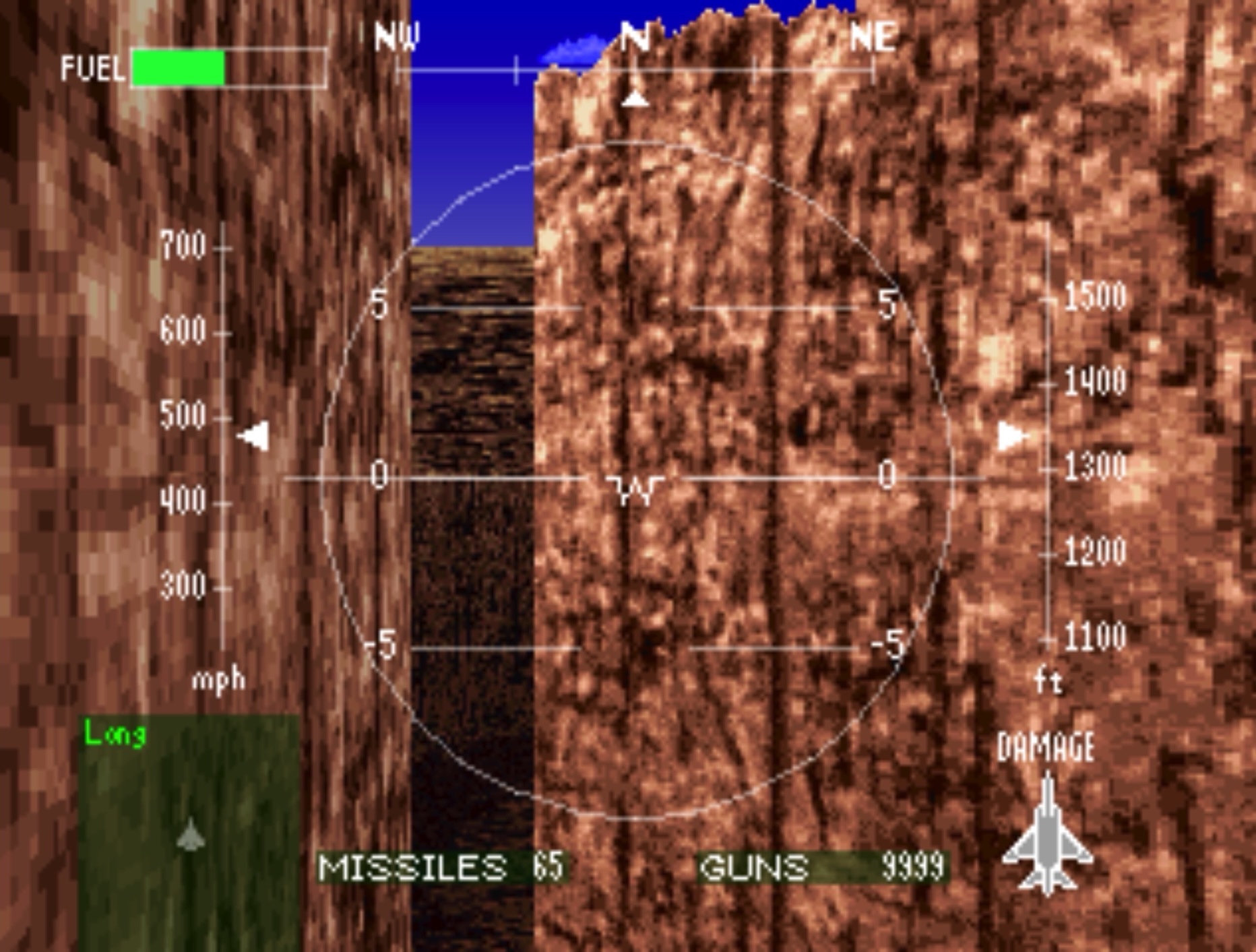
For the most part, the gameplay is recognizably Ace Combat. You’re trying to maneuver onto enemy fighters’ tails, lock on to them, and fire a couple of missiles. You’re trying to avoid letting the bad guys do the same to you. And you’re taking out ground targets along the way. All of this stuff works decently well, especially for the franchise’s first console release. The controls are a little squirrely (we’re in the pre–analog stick era), but the various jets do handle in satisfyingly distinct ways. You can hire a wingman to help you, though I can’t say that I noticed this having much of an impact on my missions. I was somewhat surprised to find that there are no special weapons in the game, as there will be in later titles. You get your gun and the one kind of missile, and that’s it.
The game’s presentation is a strong point. The pre-mission briefings are simpler than they’d become in later games, but they’re still effective. We get one voice actor doing them throughout the game, and the writing and performance feel pretty decent considering the era. Playing over a simple map of the mission area, the voiceover gives context for the operation and gives a rundown of the objectives and what the player will be facing. I found myself getting surprisingly into the soundtrack’s guitar- and synth-driven music, especially songs such as "Like a Sea Gull" and “Head First.” It feels very ’80s and ’90s, with some clear Top Gun flavor, and I’ve been listening to it on repeat. The radio chatter is minimal, limited basically to brief combat barks about incoming missiles and so on; you’re not hearing from any named characters in the middle of missions.
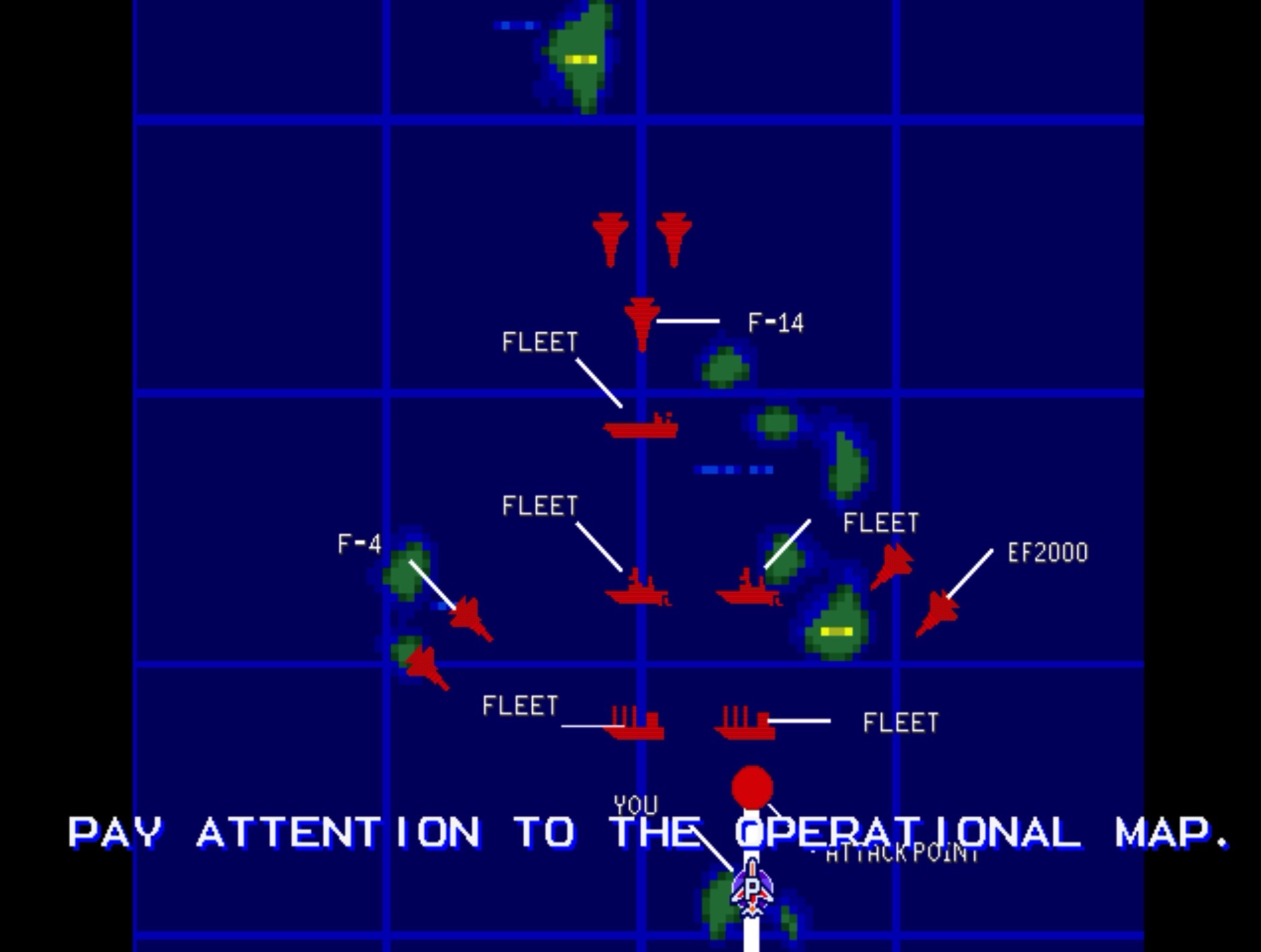
Story-wise, there’s not a ton going on. Terrorists attack some countries, and you’re part of a group of mercenary pilots fighting back. I wasn’t terribly engaged by the plot, but I do appreciate that the mercenary angle provides a justification for why you’re earning money for completing missions and then spending that money to buy new planes (and hire wingmen). Interestingly, if you crash or get shot down, you lose that plane for good—you’ll have to buy a new one if you want to fly that model again. There is some surprising thoughtfulness in the storytelling when it comes to the ethics of war; in one mission, you attack targets in a city, but it’s stressed in the briefing that the civilians have already been evacuated. This feels like a small hint of how the later games’ stories will grapple with the impact of war while at the same time presenting exciting, bombastic aerial battles during gameplay.
I can’t say that Air Combat holds up well against modern games, but that’s probably natural given that there have been so many later releases in the same series that have refined and expanded upon its ideas for multiple decades. But if you can get past the somewhat primitive graphics and controls, this is still a very enjoyable game. It’ll give you the thrilling moments you want from an arcade flight sim—zooming past an opponent at 600 knots during an aerial duel; diving to take out a ground target and then pulling up at the last second—even if you can tell that the concepts here aren’t fully mature. Playing Air Combat in 2026, I rate it at a 6 out of 10.