Game of the Year 2025
More and more, the video gaming hobby for me is about budgeting my time. I’ve got a backlog of games I’d like to be able to play and generally just a handful of free hours a week in which to play them. And I’d like some of those recreational hours to include watching movies and reading books, so even less of that time is available for gaming. (This leads to odd math—i.e., estimating that reading Ian Toll’s terrific Pacific War Trilogy is equivalent to approximately one lengthy RPG.)
Now, this shouldn’t be read as a complaint. Much of the time that might previously have been spent playing games is now going toward raising a toddler, which is a much more rewarding and entertaining and exhausting pursuit. But it does mean that I have to be selective about what I buy and play, especially in the lead-up to my Game of the Year article. There’s stuff I hoped to fit in before the end of the year but won’t, and because I like to be rigid about this, that means those games will not feature on my GOTY lists. Death Stranding 2 is the prime victim here. I loved the first game and have heard nothing but great things about this one. I bought it on a Black Friday sale but haven’t started it yet as of late December. I know it’s a mega-sized game, so I’ll just plan to enjoy it in 2026. You can look forward to reading about it in next year’s “Other Notable Stuff I Played This Year” section, but unfortunately it won’t figure into my 2025 ranking.
Budgeting my time also means that there’s also some critically acclaimed games that I tried briefly, didn’t get into, and dropped in favor of doing other things. I was grateful to be able to try Clair Obscur: Expedition 33 and Blue Prince with a low barrier of entry on the Game Pass subscription, and I can see what people like about them, but they just didn’t click with me within an hour or two, so I moved on.
Gaming with a toddler in the home isn’t entirely a matter of subtraction. Now that age 2 is well underway, we’re getting into some more screen time, and in addition to letting her watch a few carefully curated cartoons I’ve played some games with her. You’ll read more about this below, but my big takeaway is that it’s been a fun way to mix “watching stuff” with interactive play. I’ll ask her what she sees on the screen, what we should do next, etc.—it’s been a great time. She’s not ready to play video games herself yet, but I’ve enjoyed adding this to our repertoire of indoor activities, especially when the weather doesn’t permit playing outside.
As I played games throughout this year, I noticed some curious connections between the ones that I enjoyed. I suspect this is due both to trends in the gaming industry and to things that I like and value in games. Here are just a handful of examples:
- Falling to the ground from a great height damages surrounding enemies (Doom: The Dark Ages, Hades II, Donkey Kong Bananza)
- There are pirate ships (Like a Dragon: Pirate Yakuza in Hawaii, Hades II, Donkey Kong Bananza, Tony Hawk’s Pro Skater 3+4)
- You dig holes (A Game About Digging a Hole [duh], Donkey Kong Bananza)
- There are excellent 3D level maps (Doom: The Dark Ages, Donkey Kong Bananza)
- Gameplay features a rogue-like format (Ball x Pit, Hades II, Donkey Kong Bananza, Unfair Flips)
So if you hear about a rogue-like hole-digging game set on a pirate ship where you can jump from the mast to damage enemies, and also there’s a great 3D map of the pirate ship, please let me know.
With these scattered thoughts out of the way, let’s jump into my top five games. I may have played fewer games than in past years, but so many of them were excellent that I still had a tough time narrowing the list to just five; some of the “Other Notable Stuff” games felt like surefire inclusions at various points in the year. Here are my five favorite games of 2025.
5. Ball x Pit
Developed by Kenny Sun and Friends. Released October 15. Played on Nintendo Switch 2.
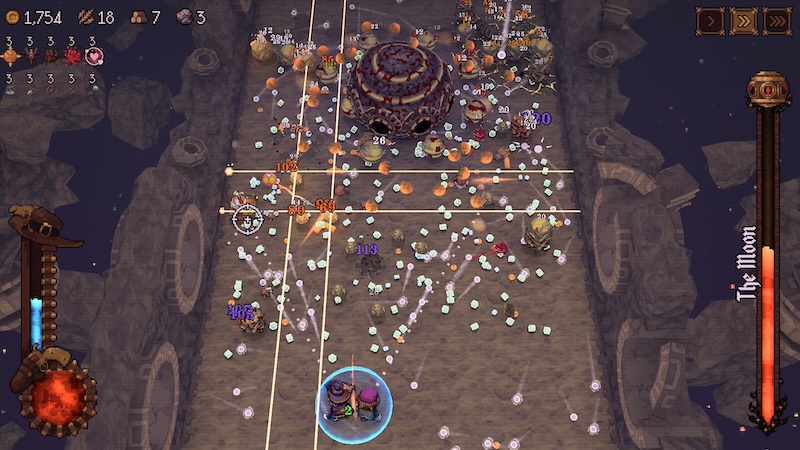
Good word of mouth from various gaming podcasts, along with a very funny launch trailer, sold me on trying Ball x Pit, and I’m glad I did. (It’s pronounced “Ball Pit,” by the way—the x is silent.) The game is a super-smart fusion of old-school Breakout gameplay with modern rogue-like mechanics, resulting in something that shares a lot in common with auto shooters like Vampire Survivors.
You control a character at the bottom of the playfield, and you proceed up the screen as enemies come at you down the screen. You are firing off balls that directly damage those enemies and/or inflict various status effects on them. As enemies die, they drop experience points you can collect to level up, which lets you select new balls or upgrade ones you already have. Balls might burn enemies, or freeze them, or poison them, or do area-of-effect lightning damage—stuff like that. So far, so cool.
But there are two big hooks with Ball x Pit. The first is that you can combine those balls together, either by Fusing them (simply combining their effects) or by Evolving them (turning them into a new, third ball with unique effects). For example: you might get the Burn ball, which does damage over time, as well as the Earthquake ball, which does damage in a 3-by-3 tile square. You can then Evolve those two balls into the Magma ball, which emits blobs of lava that deal burn damage and deal damage to nearby enemies. Also, some of those Evolved balls can themselves be Evolved in combination with other balls. The sheer number of combinations is impressive and adds a lot of variety to playthroughs. Getting a bunch of powerful, Evolved balls going in a run can fill the screen with a delightfully chaotic mixture of bouncing balls, damage numbers, and exploding enemies.
The other thing that helps set Ball x Pit apart is the characters. The game starts fairly simply and underwhelmingly; there’s just one character available, and he just shoots balls where you aim them. But as you get deeper into the game, you unlock more characters with inventive new mechanics that change your approach significantly. One shoots balls faster but has scattered aim. Another shoots balls from the top of the screen rather than from the bottom. In a nod to Breakout, one character holds a large shield that bounces balls back at enemies to do bonus damage. Some of the later characters get truly wild. I won’t spoil them all here, but I laughed out loud when I got one whose description is simply “Battles become turn-based.” And then on top of all that—partway through the game you unlock the ability to take two characters into a run together, combining their unique mechanics. This opens up even more room for strategy, and it happens deep enough into the game that it’s fairly mind-blowing when it happens.
Between rounds of the main ball-bouncing gameplay, you go back to a base where you do a little light city-building stuff. Essentially you place buildings that can earn resources, improve characters’ statistics, unlock new characters, and stuff like that—and then you bounce balls off of them to activate them. I started off strongly disliking this element of the game, and by the end I’d progressed to thinking it was just OK. Ultimately it felt clunky and unnecessary, and I wished they’d found some way to streamline it. But that aside, I enjoyed the heck out of Ball x Pit, and it made me feel a lot like Vampire Survivors did a couple years ago. The game bounces its way to number 5 on my list.
4. Like a Dragon: Pirate Yakuza in Hawaii
Developed by Ryu Ga Gotoku Studio. Released February 21. Played on PlayStation 5.
I’m a longtime fan of the Like a Dragon (né Yakuza) franchise, and the last two mainline entries in that series (Yakuza: Like a Dragon and Like a Dragon: Infinite Wealth) have landed on my top-five lists in 2020 and 2024. Between its big games, Ryu Ga Gotoku Studio releases a torrent of remakes and side games in the franchise, and Like a Dragon: Pirate Yakuza in Hawaii is one of them. The main games can get decently wacky at times, but the side games have license to become even more unhinged, and that’s what we’re looking at here. I mean, have you seen the title of this game?
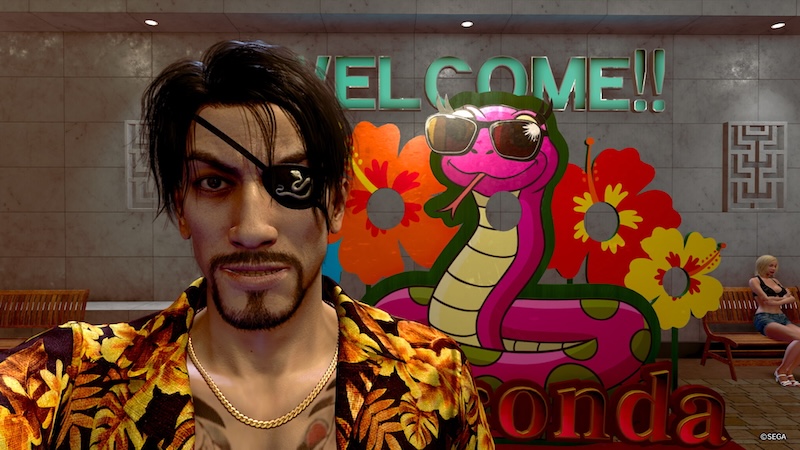
Goro Majima is a fan-favorite antagonist (and occasional protagonist) from the series, and in this one he gets amnesia and becomes a pirate. The game uses the brawler-style gameplay that was a staple of early games in the franchise, and it also introduces new ship vs. ship combat that involves managing crew members, equipping cannons, and timing your broadsides. This mix of old and new gameplay styles meshes well with the overall pirate theme, which is layered onto some classic Like a Dragon melodrama and quirky characters. All these disparate elements come together surprisingly smoothly.
Ryu Ga Gotoku Studio is famous/infamous for reusing lots of assets across its games yet making each release feel fresh through its writing and storytelling, and the trend continues here. The bulk of the on-land gameplay takes place on the Like a Dragon: Infinite Wealth Hawaii map, and it includes the vast suite of mini games that appeared in that game. Brilliantly, Pirate Yakuza recontextualizes this reused material by doing things like, e.g., making a bunch of side characters from Infinite Wealth into recruitable crew members for your pirate ship.
While I love the series overall, some of the mainline games can feel overlong and bloated, with the soap-opera gang drama stuff dragging on excessively. More than once, there’s been a point in these games where I’ve sort of lost interest in the plot and decided to beeline to the end. That’s not an issue here. Perhaps because it’s a side game in the franchise, Pirate Yakuza moves along fairly briskly and is generally more digestible in size. And what’s more, because I already played a ton of Infinite Wealth, I didn’t feel guilt in skipping some of the content that’s imported from that game. I played the Crazy Taxi–style “Crazy Delivery” game a bunch in Infinite Wealth, so I just decided not to engage with it here. In this way, fans of the series can make the game as streamlined as they want, which is cool. This condensed, piratical Like a Dragon experience winds up at the number 4 spot on my list.
3. Doom: The Dark Ages
Developed by iD Software. Released May 15. Played on Xbox Series X.
For a long time I was not a Doom Guy. I played a decent bit of Wolfenstein 3-D on PC in the mid-to-late ’90s but never really engaged with the Doom franchise in a significant way until the 2016 reboot. (And even then, I don’t think I picked that up until some time after its release.) When I did try the 2016 Doom, I found a ton to like. The action was fast-paced and gory, the weapons felt great, and the tactical combat was engaging. I also loved the way it rebelled against the very idea of caring about a storyline. Early on, a bad guy is talking to you through a computer terminal about his plan or whatever, and the player character simply smashes the terminal and keeps moving. This is the kind of let’s-get-on-with-the-action game I’m into.
Then came Doom Eternal in 2020, which amped up the speed and the difficulty. The gameplay was still great and I enjoyed it overall, but it also went heavier on the narrative. (Now the Doomguy has a ship that he returns to between missions, where he hears from people about stuff? Eh.)
The spring of 2025 brought the third release in this reboot trilogy, Doom: The Dark Ages. I’m not sure I would have bought it at full price on release, but since this is a Microsoft game, it’s on the Game Pass service, so I booted it up to give it a try. Within a mission or two I was fully onboard, and I played through to the end.
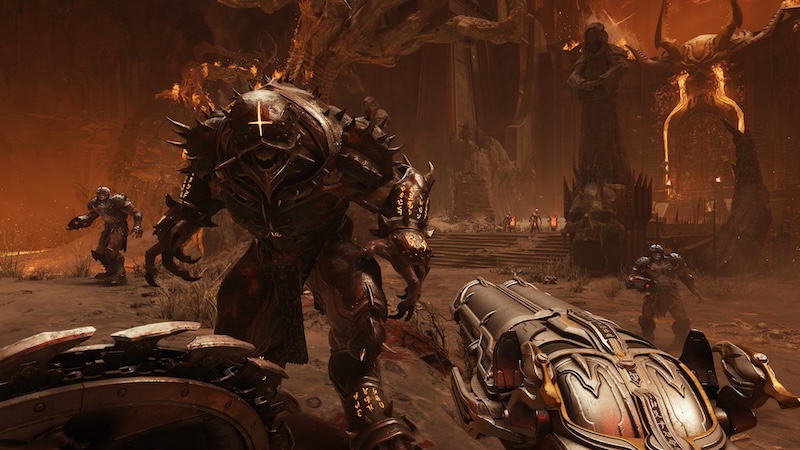
While Doom Eternal sped things up, Doom: The Dark Ages actually slows down in some ways. The centerpiece of the revised combat system is a shield that you use to block and parry attacks. Now, ordinarily I hate parrying systems, but I loved this one. The timing window is extremely generous, because the parrying itself isn’t really the central point; it’s only one part of a much broader combat scheme that you’re managing. You’re also deciding which weapon to use, monitoring your melee charges, dodging enemy projectiles, and deciding which foes to prioritize. Making the parry straightforward to execute also makes it extremely fun to do in concert with all the other stuff. The developers knew where to find the challenge and where to find the fun.
(Hey, also? One of the guns uses skulls for ammo, and it grinds up the skulls and shoots out shards of bone as bullets. That is highly rad!)
Speaking of finding the fun, the developer made smart choices elsewhere, too. The useful 3D level maps are pre-populated with icons showing where the hidden collectibles are. Does that make them less “hidden”? Sure, but the fun part is solving the simple exploration puzzles to reach those items, not figuring out where they are in the first place. It’s such a good idea that respects the player’s time.
The one downside with Doom: The Dark Ages is that it leans even more into the narrative aspects than the prior game. I checked out of this stuff almost immediately; as soon as they started repeatedly using made-up proper nouns I skipped basically all the cutscenes. (I cannot begin to explain how little I care about Prince Ahzrak, Kreed Maykr, and King Novik—and forget about Argent D’Nur, whatever that is.) But! Skipping all that stuff didn’t affect my experience of gameplay a single bit, and the storyline felt very much optional. The heavy, powerful combat of Doom: The Dark Ages blasts it into the number 3 spot on my list.
2. Hades II
Developed by Supergiant Games. Released September 25. Played on Nintendo Switch 2.
The first Hades was my favorite game of the year in my inaugural 2020 list, and this game is better than that one.
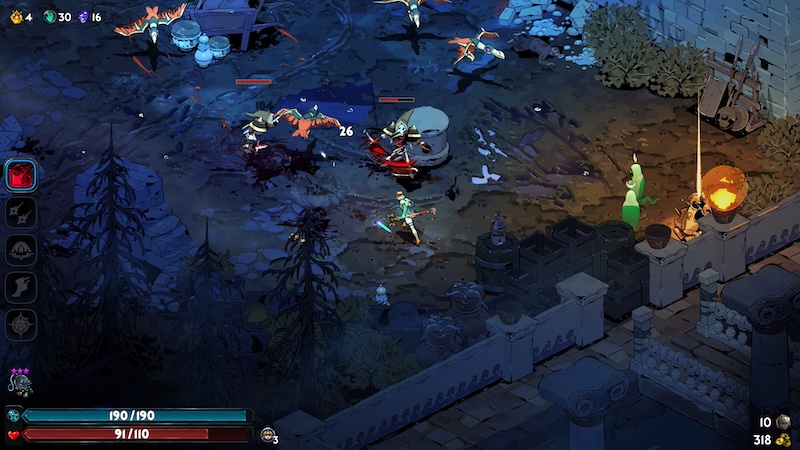
OK, I’ll say more. The Hades games are rogue-like action games with Greek-myth theming that are played from an isometric perspective. In the first one you played as Zagreus, son of the titular god of the underworld; in Hades II you are Zagreus’s sister, the witch Melinoë. Your goal is to defeat the titan Chronos, who has taken her family prisoner. (Which naturally leads to various puns about “killing time,” etc.) You select a weapon and then go on a run through a sequence of rooms containing various enemies, until finally you reach and defeat Chronos.
The first game had a solid and varied selection of weapons, engaging writing, and memorable music. (Again, see my 2020 writeup for more on how awesome Hades is.) But the new game tops it in basically every way. The weapons and the new omega attack system, in which you can hold the attack button down to execute an alternate attack, create even more variety in the gameplay. The writing is clever and thoughtful, and the voice acting is uniformly great. The music reaches or exceeds the standard set by the first game; one highlight is a boss that is a three-piece rock band that performs as you’re fighting them. And without spoiling anything, there’s essentially twice as much variety in the environments here as in the first game.
At the between-runs home base, there are lots of interesting characters with which to build relationships. (I’m an Odysseus man, myself.) Here you can also spend the resources you collected during your last run to craft upgrades that will affect later runs, gradually increasing your baseline of power. At the same time, as you learn the weapons and enemies and environments, you’re also increasing your skill level at the game; these two parallel tracks of improvement are extremely satisfying. Occasionally I worried that the sheer number of collectible and upgrade systems might collapse under its own weight, but it never quite went over that edge for me.
As with the first game, Hades II was released in early access long before its eventual 1.0 release in September of this year. I could have started playing it as early as May 2024. But even though I adored Hades, I decided to hold off until I could try the finished, polished product. I’m glad I did, because the final release of this game rules. Hades II was flirting with the top of my list for a while, but it winds up at a very respectable number 2 spot.
1. Donkey Kong Bananza
Developed by Nintendo. Released July 17. Played on Nintendo Switch 2.
Let's talk about Donkey Kong.
The character was invented as essentially a non-copyrighted stand-in for Bluto, of Popeye fame. Shigeru Miyamoto originally intended on a Popeye theme for the arcade game he was developing for a 1981 release, but Nintendo couldn’t secure the rights. Instead he had to invent original characters. He replaced the muscular sailor with a heroic everyman carpenter whose potential names included Mr. Video and Jumpman before eventually becoming widely known as Mario. And for the villain he created a big ape whose look and name felt so similar to King Kong that Universal sued Nintendo (unsuccessfully). Donkey Kong kidnapped Mario’s girlfriend, Pauline, then hurled barrels to deter the carpenter from attempting a rescue. He was introduced in his own franchise as the enemy.
Since then, Nintendo has cared surprisingly little about making Donkey Kong into a cohesive character with a clear identity. In the first sequel to that original game you play as Donkey Kong’s son; in the second sequel you play as an exterminator named Stanley, for some reason. Mario got his own franchise in the mid-1980s, but DK didn’t get to come along for the ride. The 1990s saw the most consistent take on Donkey Kong yet, but only after Nintendo gave the character to someone else. British developer Rareware, in which Nintendo had purchased partial ownership, got the opportunity to borrow a Nintendo property and make a platformer using its innovative pseudo-3D graphics technology. The company selected Donkey Kong and went on to create the wildly successful Donkey Kong Country franchise on the SNES. Rareware also redesigned the character, who had never appeared in a game with this kind of fidelity before. Their work remained DK’s signature appearance for decades. The company also invented a variety of new characters to flesh out the ape’s fairly sparse universe, including arch-villain crocodilian King K. Rool.
Rare was eventually bought by Microsoft, but its style of Donkey Kong game continued with Donkey Kong Country Returns and Donkey Kong Country: Tropical Freeze—both made, still, not by Nintendo itself but by US developer Retro Studios. Along the way there was the puzzle-platformer sub franchise Mario vs. Donkey Kong, multiple rhythm games using a bongo controller (!), and appearances in all manner of Mario Party and Mario sports games. But after Tropical Freeze in 2014, one of Nintendo’s oldest and most iconic characters went essentially dormant. And Nintendo’s internal developers themselves had really never, in four decades, established what a “Donkey Kong game” was.
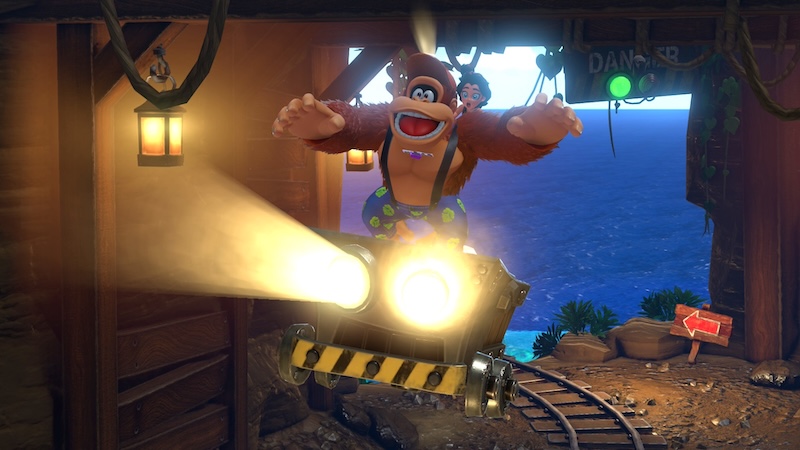
It was this conspicuously blank slate upon which Donkey Kong Bananza appeared in 2025. Bananza a 3D platformer that centers around a game mechanic that is not only new to Donkey Kong, or new to Nintendo, but pretty much new to 3D platformers in general, as far as I can tell. Through some impressive voxel technology, virtually the entirety of each level is destructible. Donkey Kong can punch his way through the terrain, exploring underground, smashing new pathways, and reshaping the landscape. He can throw explosives to blow holes in mountainsides. He can take each level basically down to the studs, if you want him to. So central is the smashing that three of the controller’s four face buttons are dedicated to types of punches. (Punch upward, punch forward, punch downward.)
For me the fun and satisfaction of this destructive gameplay never got old in dozens of hours. The developers give you a pretty astonishing level of freedom in exploring and completing the levels they’ve designed. More than once I smashed through a mountainside at random, only to stumble upon a collectible banana that was clearly meant to be found via another path. But no matter—the developers have included plenty more of them to find. Other times you can see how you’re meant to reach a banana, but you’re able to use the game’s mechanics to intentionally bypass that and find another way to get it. The result is a sense that you’ve broken the game’s rules and gotten away with something, which we’ve seen in several other of Nintendo’s top-tier releases in recent years, such as Breath of the Wild, Super Mario Odyssey, and Tears of the Kingdom.
This gameplay stuff immediately hooked me, but I also appreciated so many other things about Donkey Kong Bananza. (First of all, parenthetically, that pun in the game’s title is phenomenal.) DK himself gets a redesign that makes him a little friendlier and a lot more emotive. He’s accompanied in the game by a teenage version of Pauline from the original Donkey Kong. So many video game companions can get annoying, including in Nintendo’s own games. (Say “Listen!” in a high voice around a Zelda fan and you’ll see what I mean.) But Pauline’s writing and voice acting are charming, she’s incorporated wonderfully into the story, and she doesn’t get in the way of the fun.
References back to Donkey Kong’s Nintendo-developed origins are not too surprising, but I was delighted that the game also brings in significant elements from the Rareware-developed Donkey Kong Country series, embracing them as part of the lore in a smart way that I won’t fully spoil here. The music, especially the songs that accompany DK’s transformation power-ups, and especially especially the main theme song “Heart of Gold,” is catchy and integrated nicely into the game. There’s a skill tree that I didn’t hate (an achievement), the pacing is engaging and escalatory, and the level design is clever and, as mentioned above, generous.
Also, strangely—Donkey Kong Bananza features one of the eeriest, most otherworldly sections I’ve ever experienced in a game. Throughout all the early levels, you run into these guys called Fractones, which are rocky blue characters that are generally friendly and help you on your journey. As you progress through the game, descending deeper into the planet and nearing the core, you find yourself in a stage called the Forbidden Layer. Suddenly there's creepy ambient music, the level is a spooky void with abstract geometry, and all of the Fractones start telling you that you shouldn’t be there, that you should get out, etc. The stark change in tone is genuinely disturbing. And then you discover that the central mechanic of this level is actually creating terrain rather than destroying it, turning everything upside-down from a gameplay perspective too. It’s brilliant.
With all that, Donkey Kong Bananza was looking like it would rate high on my list. But its status atop the ranking was cemented when it became my daughter’s favorite game. At her age we’re allowing more screen time, and I figured that watching me play a family friendly game could encourage a little more interactivity than watching a cartoon. This turned out to be a huge hit. Bananza became known as Monkey Game, and she started asking to play it frequently. Rather than playing through the game’s storyline, we generally would simply run around the postgame DK Island level, which doesn't have enemies to fight and features a ton of fun little things to see and do, including:
- Climbing the mast of a pirate ship and leaping into the water to make a big splash (“Jump!”)
- Finding huge piles of bananas (“Banana!”)
- Going to Donkey Kong’s treehouse (“Monkey house!”)
- Riding the mine cart (“Train!”)
- High-fiving the bird (“Bird!”)
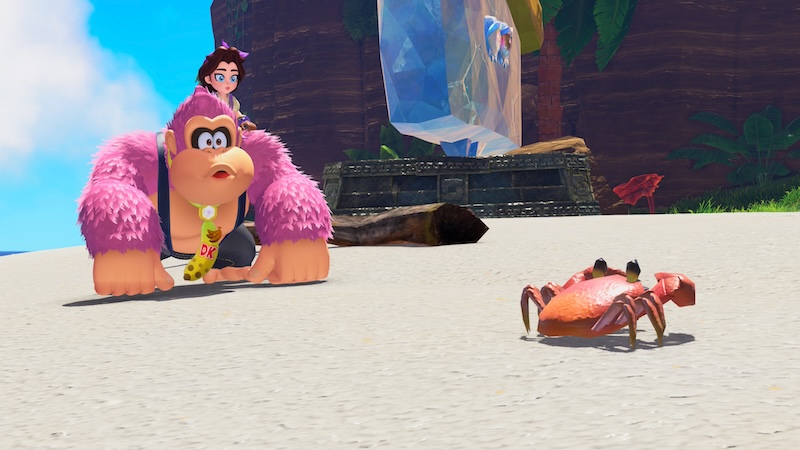
- Digging in the sand looking for crabs (“Where crab?”)
Playing with her was great fun, and it also helped me fully appreciate all the little things the developers packed into the level. Crabs spawning when you dig through sand is a throwaway detail when you’re playing the game at full speed, but in our observations we figured exactly how to make them appear, how close you can get before they skitter away, and what makes them dig back into the sand.
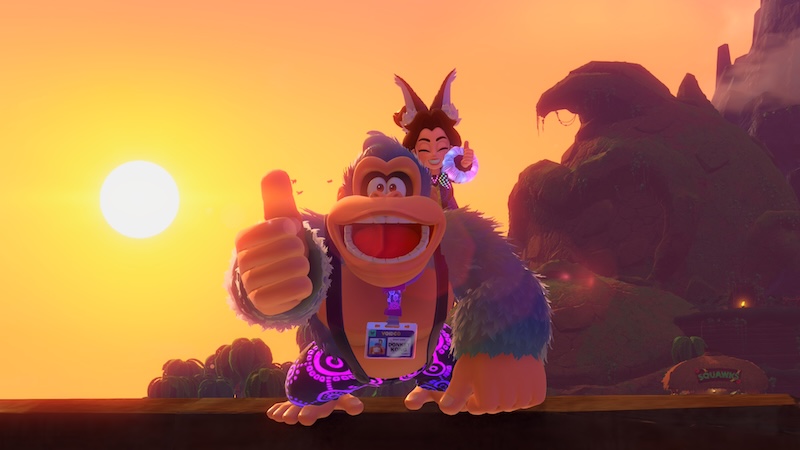
So when I think of Donkey Kong Bananza, I think of a phenomenally ambitious and polished reinvention of Nintendo’s oldest extant video game character—and I also think of the fun I had exploring the game with my daughter. Donkey Kong Bananza easily smashes its way to the number 1 spot on my list.
Other Notable Stuff I Played This Year
Avowed
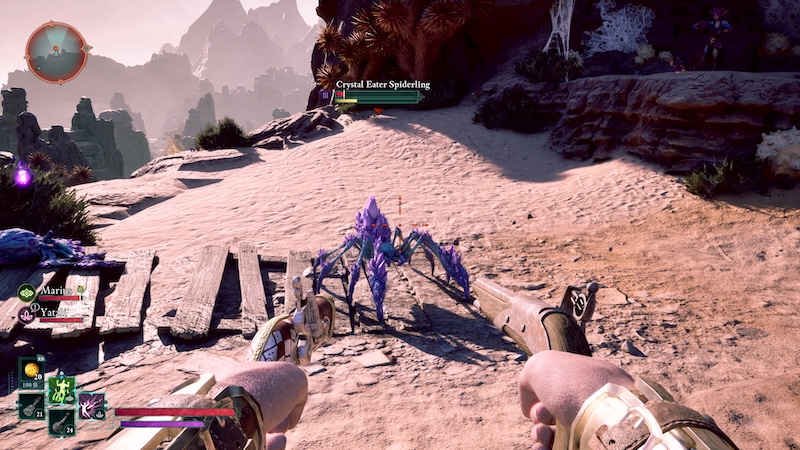
This game was a fun surprise—and one that I never would have tried had it not been on the Game Pass subscription service. Think a Skyrim-style RPG, except that instead of a huge open world, it has multiple moderately sized open areas to explore; this means that those areas are densely packed with interesting things to see and do. And the combat, equipment, and even crafting were unexpectedly engaging. (It’s a fantasy world, but you can use guns alongside your swords and magic!) There’s a lot of story and lore, some of which carries over from previous games set in this universe, but I found it very easy to ignore that stuff and get back to the great gameplay.
Mario Kart World
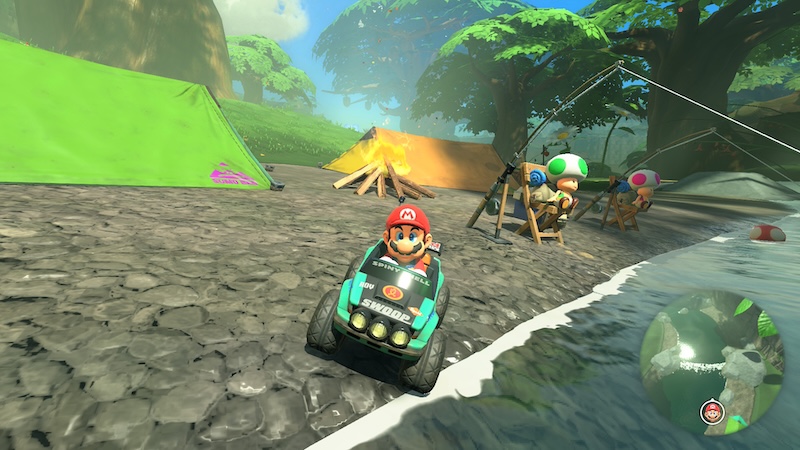
This Nintendo Switch 2 launch title is a good game, but some missteps hold it back from reinventing the Mario Kart franchise in the way it seems to want to. It’s an open-world game, a fascinating concept for Mario Kart; all the tracks exist in the same contiguous space, and there’s a lot of landscape to explore between the tracks. But the huge map, while full of neat environmental details, doesn’t contain very much of substance. And while the new Battle Royale-esque Knockout Tour mode is fun and fresh, they kind of wrecked the classic four-race Grand Prix mode by making you drive from course to course and do only a single lap most of the time. This means you don’t get the chance to gain familiarity with specific tracks in the way that you used to in old games, and I don’t know that I could name a specific track from this game. But the core driving remains excellent, the music is top-tier, and the new costumes for each character are charming. It feels like the execution got about 80 percent of the way to a complete success on this one.
A Game About Digging a Hole
You start digging a hole in your backyard. You dig up stuff that you can sell to upgrade your shovel. You can now dig faster; you are able to dig up stuff that lets you dig even more effectively, etc. What you find at the bottom of the hole (spoiler alert) isn’t especially satisfying, but this was a satisfying and meditative experience for an hour or two. And also it cost like $4.
Tony Hawk’s Pro Skater 3 + 4
Tony Hawk’s Pro Skater 1 + 2 was my fourth favorite game of 2020, and five years later comes the remake of the next two games in the series. The controls and presentation remain excellent, but I think your enjoyment will hinge on how much you care about the original games. I played a lot of THPS 1 and 2 as a kid, which contributed to my love for that 2020 release. I also played a ton of THPS 3 on the GameCube, but the extent of my experience with 4 is renting it from Blockbuster once or maybe twice. So I had no nostalgic attachment to half the levels here, and I think that made my interest fall off much more quickly than it did for the earlier remake.
Unfair Flips
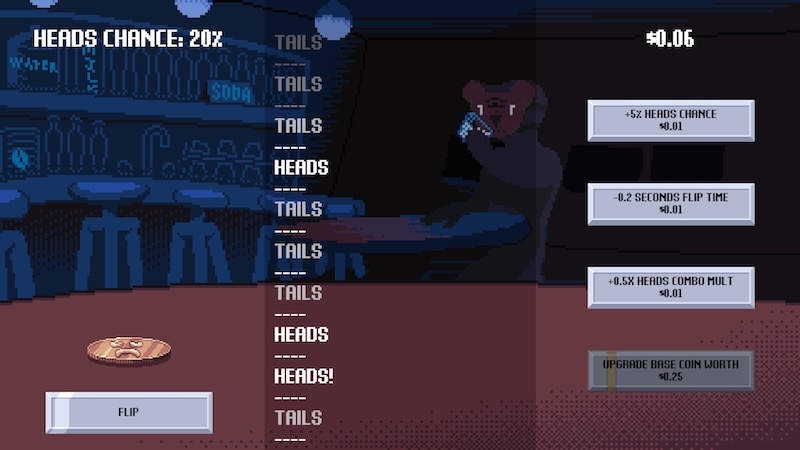
Unfair Flips is a sorta-satirical stripped-down take on the rogue-like genre. You flip a coin over and over, and you simply need to get ten heads in a row to beat the game. (If you had stellar luck and ten heads off the bat, you could beat the game in about a minute.) For each heads you land, you earn money that you can spend to upgrade the odds of getting heads, the monetary value of each heads, etc. There’s not a lot of game here, but this is a really neat idea for illustrating the raw, cold math of probabilities in an engaging way.
Ghost of Yotei
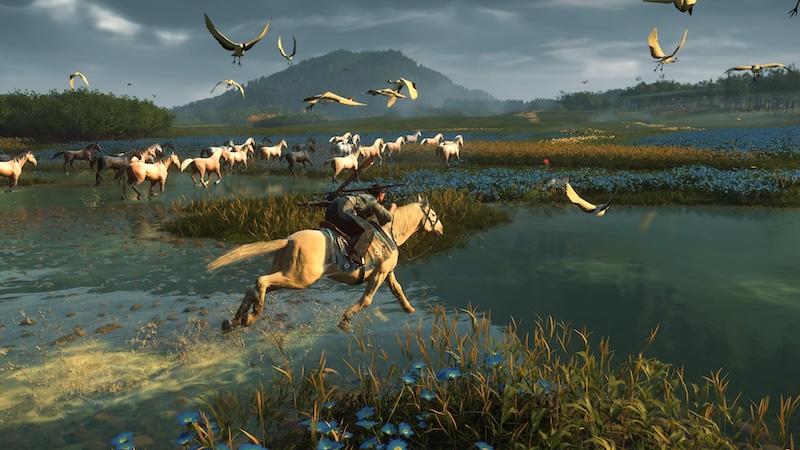
This open-world game set in 1600s Japan features absolutely astonishing environmental visuals; the screenshot button got a real workout on this one. And the gameplay’s great, too. There’s tons of interesting stuff to find, do, and see, and the game is full of clever touches. One of my favorites: In one area, you train on how to use dual blades, and as part of that training you have to enter a sequence of buttons quickly to chop through bamboo, an activity you have repeatedly done elsewhere in the game with your regular right-hand sword. But because you’re learning dual blades, you need to strengthen your left hand—and so instead of hitting the usual face buttons for this bamboo strike, you need to use more awkward inputs on the left side of the controller, including L3, pushing in the left stick. It’s basically impossible to hit the inputs quickly enough, so you genuinely feel the character’s experience of being at the bottom of a learning curve. As you continue your training and your weapon mastery develops, the button sequence becomes easier to the point where you can slice through the bamboo easily. It’s very cool. Unfortunately the game fell off hard for me around 20 hours in; the style of gameplay took a turn I disliked, and there was a major story development I just didn’t buy. I ended up hustling through to the ending. But overall Ghost of Yotei is still an excellent game.
Diddy Kong Racing
AKA “Monkey Racing,” when playing with my toddler, a natural companion to "Monkey Game." This Nintendo 64 racer is pretty great but those Silver Coin Challenges can get real frustrating.
Wheel World
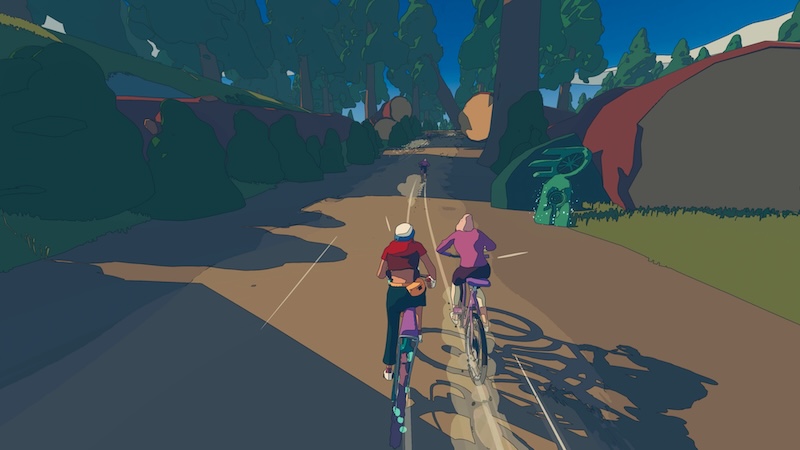
I have a lot of feelings about Wheel World, probably because the concept should appeal to me so much. It’s a chill indie open-world bike racing game with a cel-shaded art style and a vibe-centric synth soundtrack. That sounds precisely up my alley, but the game lacked polish in a way that kept dragging it down. I encountered frame-rate slowdowns, graphical glitches, sudden dropouts of the music, and even an ill-timed hard crash. And the final race is designed in a frustrating way that leaves a sour taste in your mouth right at the end. Still, the opening couple of hours were fun as long as things were working properly. This one feels a little more development time away from being a really great game.
Still want to play, won’t finish in time
There are a few 2025 games that are still in my queue; it’s too late for them to make it into this year’s list, but there’s a good chance you’ll hear about them in next year’s Other Notable Stuff I Played This Year section.
- Metroid Prime 4: Beyond
- Death Stranding 2
- Sektori
- Keep Driving
- The Outer Worlds 2